Published July 12, 2026 · by Glacier Roofing
Key takeaways
- A properly specified standing-seam metal roof lasts 50+ years; exposed-fastener panels typically last 25-40.
- Near saltwater, salt air is the biggest threat to a metal roof's lifespan — the right spec beats the raw material every time.
- 24-gauge steel with a Kynar 500 (PVDF) finish and corrosion-resistant fasteners is the coastal-tough standard.
- A yearly inspection, plus keeping panels clear of moss and debris, protects your warranty and your money.
- In Whatcom County, metal is the best long-term roof — but only if it's built for rain, wind, and (near the bay) salt.
A metal roof is the closest thing to a forever roof you can buy in Whatcom County. But how long it actually lasts depends far more on how it’s built and installed than on the word “metal” alone. Between our wet Pacific Northwest winters, hard valley outflow winds, moss-friendly shade under the Douglas firs, and — for homes near the bay — constant salt air, Whatcom County tests a roof harder than most of Washington. Here’s what real lifespan looks like around here, and what pushes a metal roof toward 50-plus years.
A quality standing-seam metal roof lasts 50 years or more, while exposed-fastener panels typically last 25 to 40 years. In our high-rain, salt-touched Whatcom County climate, lifespan comes down to the spec: 24-gauge steel, a Kynar 500 (PVDF) finish, and corrosion-resistant fasteners routinely push a metal roof past 50 years, while a cheap coastal spec can fail decades early.
What actually determines how long a metal roof lasts?
“Metal” covers a lot of products, and the gap between the shortest- and longest-lived is huge. Four things set the number more than anything else:
- Panel type — hidden-fastener standing seam versus exposed-fastener ag-panel.
- Base metal and gauge — 24-gauge steel and aluminum resist coastal corrosion better than thin 29-gauge panels.
- Coating — a marine-grade PVDF (Kynar 500) finish holds color and fights salt far longer than a builder-grade polyester paint.
- Fasteners and flashing details — the parts that fail first, especially near saltwater.
Around here, the coating and fasteners often matter more than the metal itself. Two roofs made of the same steel can be 25 years apart in lifespan just because one was built for our weather and the other was ordered off a generic price sheet.
Metal roof types vs. lifespan vs. maintenance
The table below shows realistic service life in Whatcom County’s wet, sometimes-coastal climate, not lab numbers. Real results depend on how close you are to saltwater, plus slope, shade, and install quality.
| Metal roof type | Typical lifespan | Maintenance level | Salt-air / coastal notes |
|---|---|---|---|
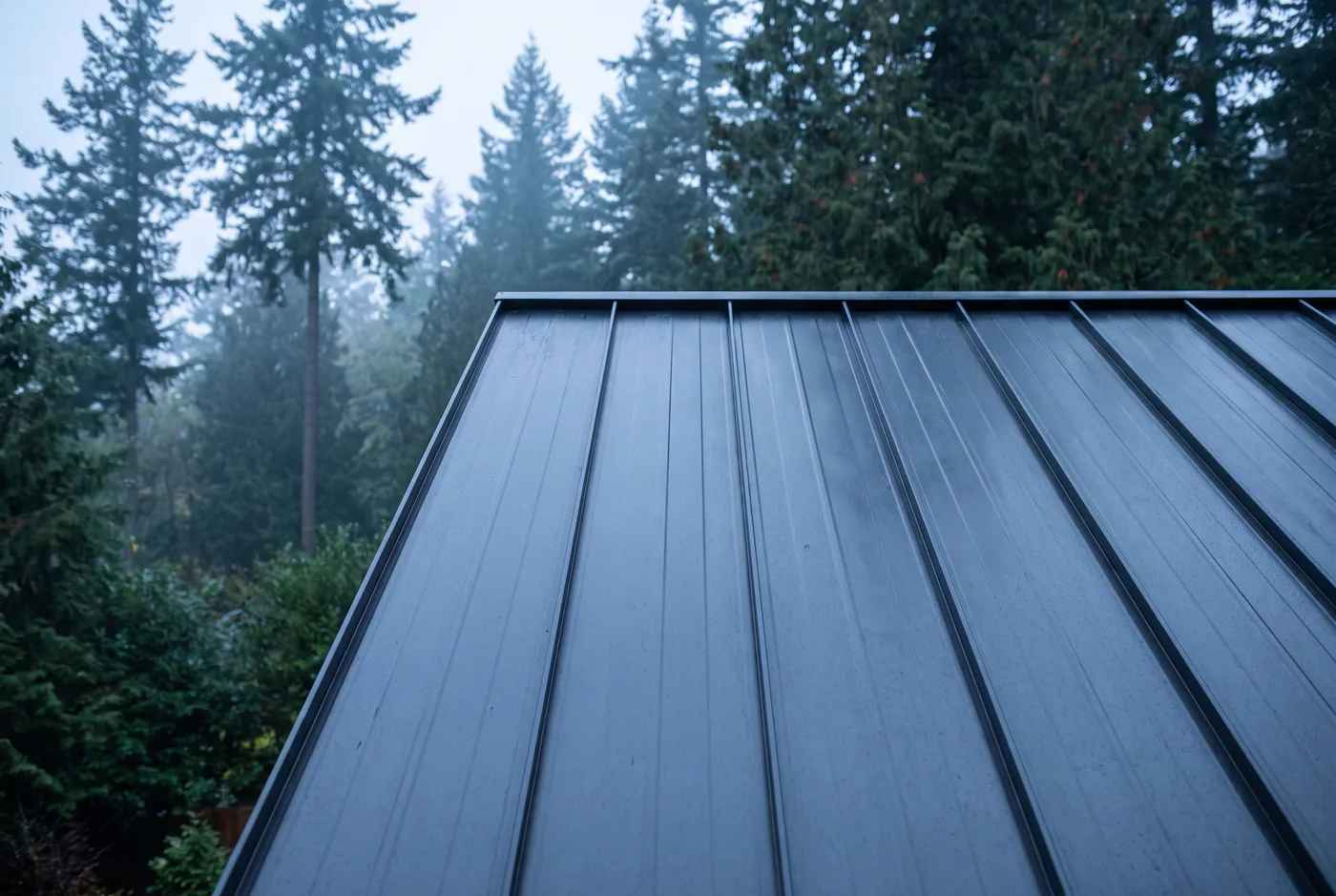
| Standing-seam steel, 24-ga, Kynar 500 | 50-70 years | Low | The local gold standard; hidden fasteners, no exposed gaskets to fail |
| Standing-seam aluminum | 50+ years | Low | Great right on the waterfront; naturally corrosion-resistant |
| Metal / stone-coated steel shingles | 40-50 years | Low–moderate | Good looks and hail resistance; verify a PVDF or premium coating |
| Exposed-fastener steel (ag-panel) | 25-40 years | Moderate | Budget-friendly; screw gaskets need attention around year 15-20 |
| Copper (accents or full roof) | 70-100+ years | Very low | Premium; salt-safe but expensive and rarely full-roof out here |
| Thin 29-ga polyester-painted panel | 15-25 years | High | Not recommended near saltwater — corrodes and chalks early |
If budget rules out standing seam today, compare your options honestly on our standing-seam metal roofing page before you default to the cheapest panel — the up-front savings on thin, builder-grade metal often vanish in early repairs.
Does salt air shorten a metal roof’s life?
Yes — near the water, salt air is the single biggest threat to a metal roof’s life, and it hits hardest on the exposed metal that the spec sheet controls. Waterfront homes at Bellingham Bay, Birch Bay, Blaine, Semiahmoo, Cherry Point, and Point Roberts sit in near-constant sea mist that attacks the parts a cheap roof leaves weak:
- Cut edges where panels are trimmed, exposing bare steel.
- Fasteners — plain zinc screws rust, streak, and lose their grip.
- Flashings and valleys where different metals meet and moisture lingers.
Salt doesn’t really dissolve a good panel. It finds the weak point and starts there. That’s why the fix isn’t “more metal” — it’s a smarter spec.
How the right spec extends metal roof life
The difference between a 25-year coastal roof and a 60-year one usually comes down to three choices. This is the marine-grade standard we recommend for Whatcom County homes near saltwater:
- 24-gauge steel (or aluminum right on the water). Heavier gauge resists denting, oil-canning, and edge corrosion far better than 26- or 29-gauge panels.
- Kynar 500 / PVDF coating. This fluoropolymer finish keeps color true and salt at bay for decades; builder-grade paints chalk and fade in a fraction of the time out here.
- Corrosion-resistant fasteners and closures. Stainless or coated fasteners, plus clean flashing details, protect the joints salt attacks first.
Built this way, a standing-seam roof shrugs off the salt air and reaches the top of its lifespan range. Get it wrong, and even good steel can fail decades early. If you’re weighing a full re-roof, our roof replacement team scopes the coastal-tough version so you buy the roof once.
Maintenance tips to reach the full lifespan
Metal really is low-maintenance, but “low” isn’t “none.” A little care each year protects both the roof and your workmanship warranty:
- Book a free inspection every year, ideally after the heavy November rains, so small issues are caught before winter.
- Keep moss and debris off shaded north slopes. Under Douglas firs, moss and fir needles trap moisture against seams and flashing. Never pressure-wash — it drives water under panels and voids coatings.
- Clear gutters and valleys so our heavy winter rain drains fast; standing water and debris shorten the life of every roof.
- Re-torque or replace exposed fasteners on ag-panel roofs around years 15-20 before gaskets dry out and leak.
- Consider a zinc or copper ridge strip — the runoff naturally slows moss and algae on those damp north slopes.
Our roof inspections & maintenance program handles this on a schedule, and a light, safe moss treatment and roof cleaning keeps shaded slopes clear without hurting the finish.
Is a metal roof worth it in Whatcom County?
For most Whatcom County homes, yes. A standing-seam metal roof runs about $14,000–$45,000+ as a local estimate — not a quote — versus $9,000–$24,000 for asphalt shingles, but the math favors metal over time:
- Long life: one 50-year roof instead of two or three shorter-lived shingle roofs.
- Fewer re-roofs: every re-roof means tear-off, disposal, and labor all over again. One long-lived roof spares you repeating that cost two or three times.
- Weather fit: metal handles our hard valley outflow winds and wet winters, and resists the moss that eats shingles on shaded slopes.
Metal isn’t the right call for every roof — slope, budget, and the look of a historic home all matter — and we’ll tell you honestly when shingles or cedar make more sense for your place in Bellingham, Ferndale, Lynden, Blaine, or the foothills. But if you want to buy a roof once and stop thinking about it, metal is the best long-term choice here. Ranges here are estimates, not quotes; a free roof inspection gives you your real number.
Get an honest answer for your roof
Want to know how many years your current roof has left, or whether metal makes sense for your home? We give free roof inspections and written estimates across Whatcom County, with honest repair-or-replace advice — no pressure. Call Glacier Roofing at (360) 483-1333 or request your free inspection and we’ll give you straight numbers for your home, your slope, and your exposure.
Frequently asked questions
How long does a metal roof last?
Does salt air shorten a metal roof's life?
How long does standing seam last compared to exposed-fastener metal?
Is a metal roof worth it in Whatcom County?
How often should a metal roof be inspected in Whatcom County?
Ready to move forward?
Talk to a local Whatcom roofer — free inspection, honest advice.