Published July 20, 2026 · by Glacier Roofing
Key takeaways
- Good roof ventilation is a balanced system: cool air in low at the soffits, warm moist air out high at the ridge.
- In our damp marine climate, poor ventilation shows up as attic condensation, mold, early shingle failure, and roof moss.
- Most shingle brands require code-compliant ventilation, so a poorly vented attic can quietly void your warranty.
- You can usually add ridge and soffit vents during a re-roof, and sometimes add them without a full replacement.
- Metal roofing paired with balanced venting is the driest, longest-lasting setup for Whatcom County weather.
Roof ventilation is one of the most ignored parts of a home — right up until a homeowner climbs into the attic and finds it dripping. In the Pacific Northwest, and especially here in Whatcom County, how your roof breathes is not a small detail. We get about 35 inches of rain a year in Bellingham — far more up in the foothills — and long, damp winters. Airflow quietly decides how long your shingles last and whether your attic stays dry or slowly rots from the inside.
Roof ventilation is the balanced flow of air into your attic through intake vents at the eaves and out through exhaust vents at the ridge. That steady exchange carries away trapped heat and moisture. It stops condensation, mold, moss, wood rot, and winter ice buildup — which matters most in the damp Pacific Northwest.
Why does roof ventilation matter in the Pacific Northwest?
Our marine climate is the whole reason ventilation matters so much here. Warm, damp air from cooking, showers, and daily life rises into the attic. When that air hits cold roof sheathing on a wet November night, it turns into water drops on the underside of the deck and on the nail tips — the same way a cold glass sweats in summer. Do that for months, and you get soggy insulation, rusted fasteners, black mold, and finally a rotted deck.
A balanced system stops that cycle. Cool, dry outside air comes in low at the soffits, sweeps up the underside of the roof deck, picks up heat and moisture, and leaves at the ridge. The attic stays close to the outdoor temperature, so nothing gets a chance to condense and pool. In summer it does the opposite job, clearing out trapped heat that would otherwise bake your shingles from below.
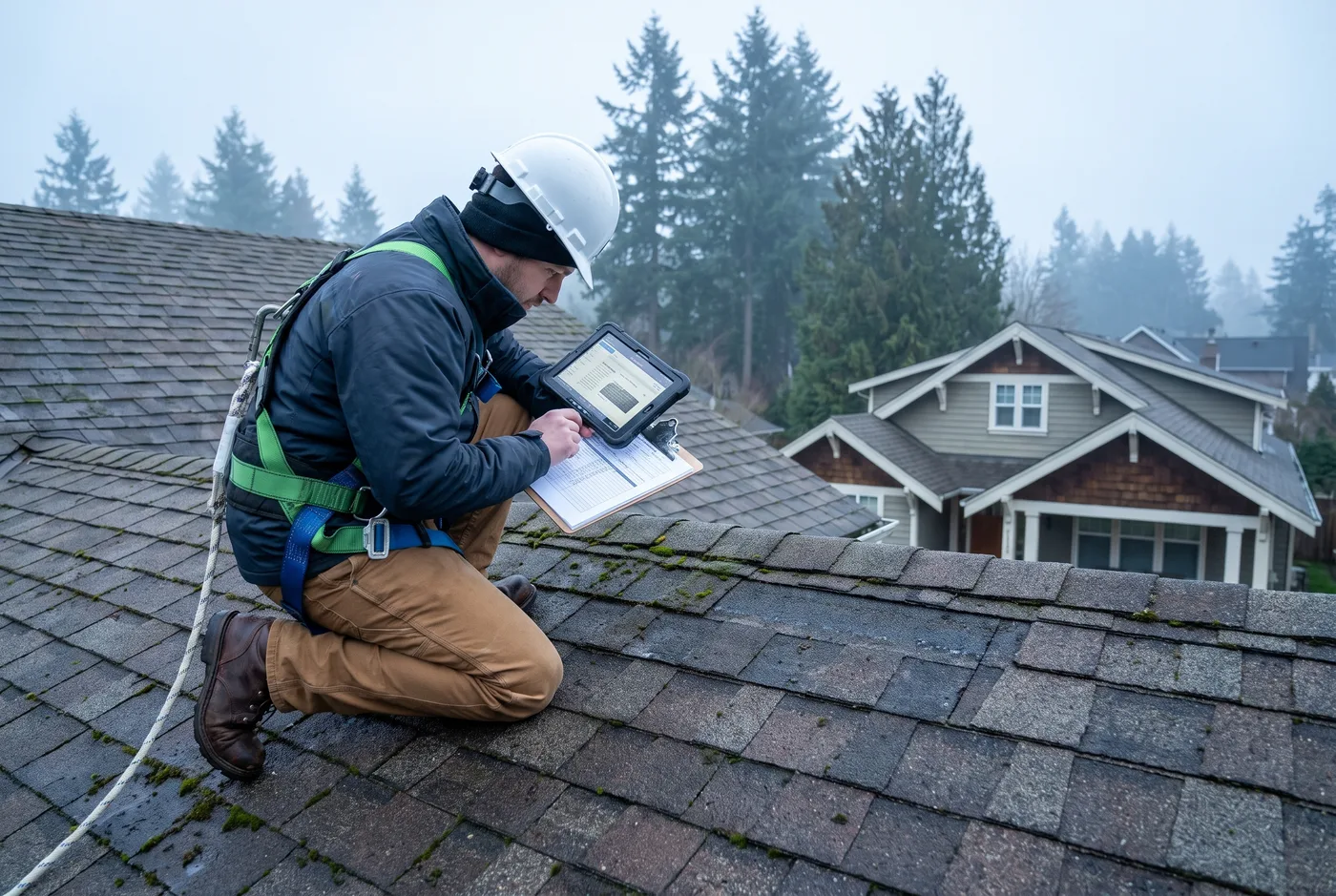
Whatcom County conditions raise the stakes. Homes under tall Douglas fir in Sudden Valley and the foothills barely see direct sun, so roofs dry slowly. Salt air near the water rusts cheap fasteners and vent parts. And hard outflow winds off the Nooksack and Fraser valleys mean where you put vents — and their quality — really matters. This is the kind of thing our crews check during roof inspections and maintenance. An attic that looks fine from the street often tells a different story from the inside.
How does roof ventilation work?
Think of your attic like a chimney. Air has to get in at the bottom and out at the top for the system to move at all. That’s why ventilation is never one product. It’s intake and exhaust working as a pair. Add exhaust without enough intake, and the vents just pull air from inside your house. Add intake without exhaust, and the damp air has nowhere to go. Balancing the two — close to a 50/50 split of net free area — keeps air flowing on its own, no electricity needed.
Here are the common vent types you’ll see on Whatcom County roofs and what each one does:
| Vent type | Role | How it works |
|---|---|---|
| Ridge vent | Exhaust | Runs the length of the peak so hot, moist air escapes at the highest point. The workhorse of a balanced system and nearly invisible. |
| Soffit vent (intake) | Intake | Sits under the eaves and pulls cool, dry outside air in at the bottom of the attic to feed the ridge. Easy to block with insulation. |
| Gable vent | Exhaust / intake | Set in the end walls. An older passive option that can short-circuit ridge-to-soffit airflow if mixed in without a plan. |
| Powered vent (fan) | Exhaust | An electric or solar fan that forces air out. Can backfire by pulling heated air or drawing wind-driven rain in near saltwater. |
| Box vent (louver) | Exhaust | Low-profile static vents set near the ridge. A simple exhaust choice where a continuous ridge vent won’t fit the roof line. |
For most homes in Bellingham, Ferndale, or Lynden, a continuous ridge vent with clear soffit vents is the best setup: quiet, motorless, and steady through every season.
What are the signs of poor roof ventilation?
You don’t need to climb onto the roof to spot trouble. The warning signs of poor roof ventilation usually show up inside the attic or on the shingles. Watch for:
- Attic condensation or damp sheathing. Frost or water drops on the underside of the deck, rusty nail tips, and a musty smell all point to moisture that can’t escape.
- Mold and mildew. Black or gray staining on the rafters, sheathing, or insulation means humidity has been sitting in the attic long enough to grow. This is the most common complaint we hear.
- Early shingle failure. Curling, blistering, or cupping shingles — and heavy granule loss — often trace back to heat cooked into the deck from below, not just age or weather above.
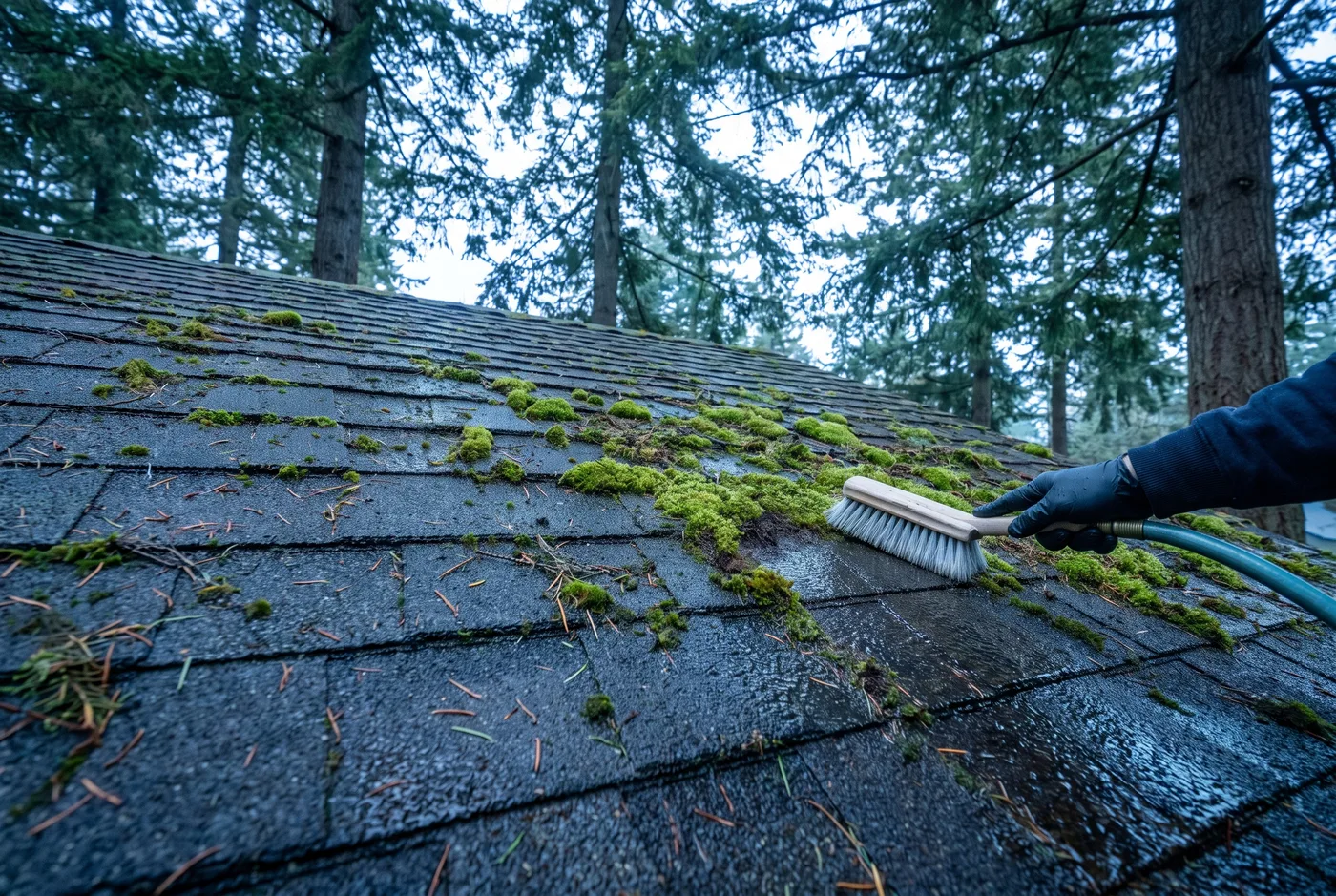
- Roof moss and algae. A roof that never dries out feeds moss, especially on shaded north slopes. Ventilation helps the deck breathe. See our guide on how to remove roof moss for the surface side of the problem.
- Ice buildup at the eaves. Warm attic air melts snow that refreezes at the cold eave, forcing water back under the shingles — a real risk up in the foothills.
- Higher heating and cooling bills. A moisture-soaked, superheated attic makes your HVAC work harder year-round.
Any one of these on its own might be something else. Several together almost always mean the attic isn’t breathing. Trapped heat and moisture shorten a roof’s life, so poor ventilation is one of the hidden factors in how often you should replace your roof. A well-vented roof simply lasts longer.
How does ventilation tie into my roof warranty?
This is the part homeowners rarely hear about until it costs them. Major shingle makers — including IKO, Owens Corning, and CertainTeed, all of which we’re certified to install — require code-compliant, balanced attic ventilation as part of their product warranties. The reason is simple: an under-vented attic cooks shingles from below and voids the very protection you paid for. If shingles curl early and the maker finds the attic was starved of airflow, the claim can be denied.
That’s why ventilation isn’t an add-on for us. It’s built into every install. As a certified IKO ROOFPRO Select, Owens Corning Preferred, and CertainTeed contractor, we build each roof to the maker’s ventilation spec so your material warranty stays good. We back the labor with our own 15-year workmanship warranty. When you’re weighing a roof replacement, asking about the ventilation plan is one of the smartest questions you can put to any contractor.
Does the roofing material change my ventilation needs?
Every roof needs to breathe, but the system looks a little different by material. Asphalt shingles lean hard on that ridge-and-soffit airflow, because trapped heat wears them out fastest. Metal roofs shed heat and moisture more easily and work great with balanced venting. That’s a big reason standing-seam metal roofing is our top long-term pick for Whatcom County homes — a well-vented metal roof can last 50-plus years in this climate. Flat and low-slope roofs can’t use a ridge, so they rely on special venting details instead.
Whatever roof you have, the rule holds: keep cool air coming in low and warm, wet air going out high. Then the whole roof stays drier and lasts longer.
Get your attic breathing right
If your attic smells musty, your shingles are aging fast, or you’ve never had the ventilation checked, it’s worth a look before the next wet season. Glacier Roofing is a licensed, bonded, and insured Whatcom County contractor serving Bellingham, Ferndale, Lynden, Blaine, Everson, and the Mount Baker foothills. Our roof inspections are free. We’ll tell you honestly whether you need a simple vent upgrade or a bigger fix — no upselling. Contact us or call (360) 483-1333 to schedule your free roof inspection and maintenance visit.
Frequently asked questions
Why does my attic get damp or moldy?
Does roof ventilation prevent moss?
How much ventilation does my roof need?
Are powered attic fans a good idea in the Pacific Northwest?
Can I add ventilation without replacing the whole roof?
Ready to move forward?
Talk to a local Whatcom roofer — free inspection, honest advice.