Published July 14, 2026 · by Glacier Roofing
Key takeaways
- How often you replace a roof depends on the material: asphalt 15-30 years, cedar 20-40, and standing-seam metal 50+.
- The wet, moss-heavy Whatcom County climate pushes every roof toward the low end of its range.
- The clearest signs to replace are curling shingles, granules in gutters, attic leaks, sagging, and repeated repairs.
- A few small problems usually mean repair. Several signs together usually mean replace.
- A free roof inspection is the only way to know how many years your roof really has left.
Your roof is the most weather-beaten part of your home, and around here it takes a beating drier regions never see. Between our wet Pacific Northwest winters — about 35 inches of rain a year in Bellingham, far more in the foothills — hard valley outflow winds, and thick moss on north slopes shaded by Douglas firs, Whatcom County roofs age faster than the brochure numbers suggest. The good news: you can predict when to replace once you know your material and what to watch for.
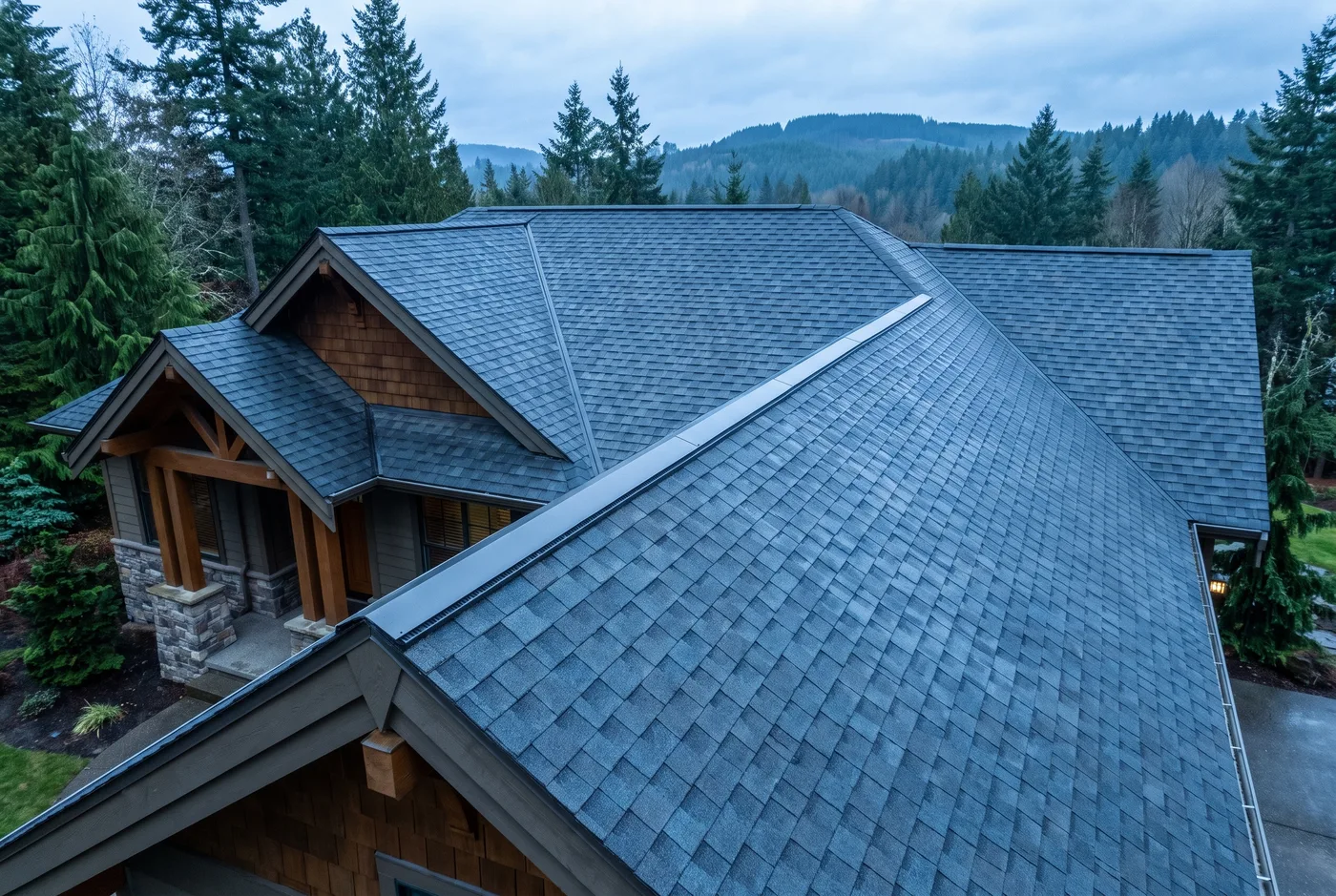
How often you replace your roof depends on the material: 3-tab asphalt shingles last about 15-20 years, architectural asphalt 25-30, cedar shakes 20-40, and standing-seam metal 50 or more. In the wet, moss-heavy Whatcom County climate, plan on the low end of each range unless your roof is metal or has been well cared for.
How often should you replace your roof, by material?
The biggest factor is what your roof is made of. Below are real-world service lives for Whatcom County — not lab-perfect numbers — plus what tends to cut them short around here. Real results depend on slope, shade, how close you are to saltwater, venting, and install quality.
| Roofing material | Typical lifespan | What shortens it here |
|---|---|---|
| 3-tab asphalt shingles | 12-18 years | Moss on shaded north slopes, wind-lifted tabs, wet winters |
| Architectural (dimensional) asphalt | 22-28 years | Moss and algae, granule loss, poor attic venting |
| Cedar shakes | 20-35 years | Steady damp, rot, moss under the Douglas firs |
| Standing-seam metal (24-ga, Kynar 500) | 50+ years | Salt-air rust at cut edges and fasteners if under-built |
| Exposed-fastener metal (ag-panel) | 25-40 years | Screw-gasket failure, salt on plain fasteners |
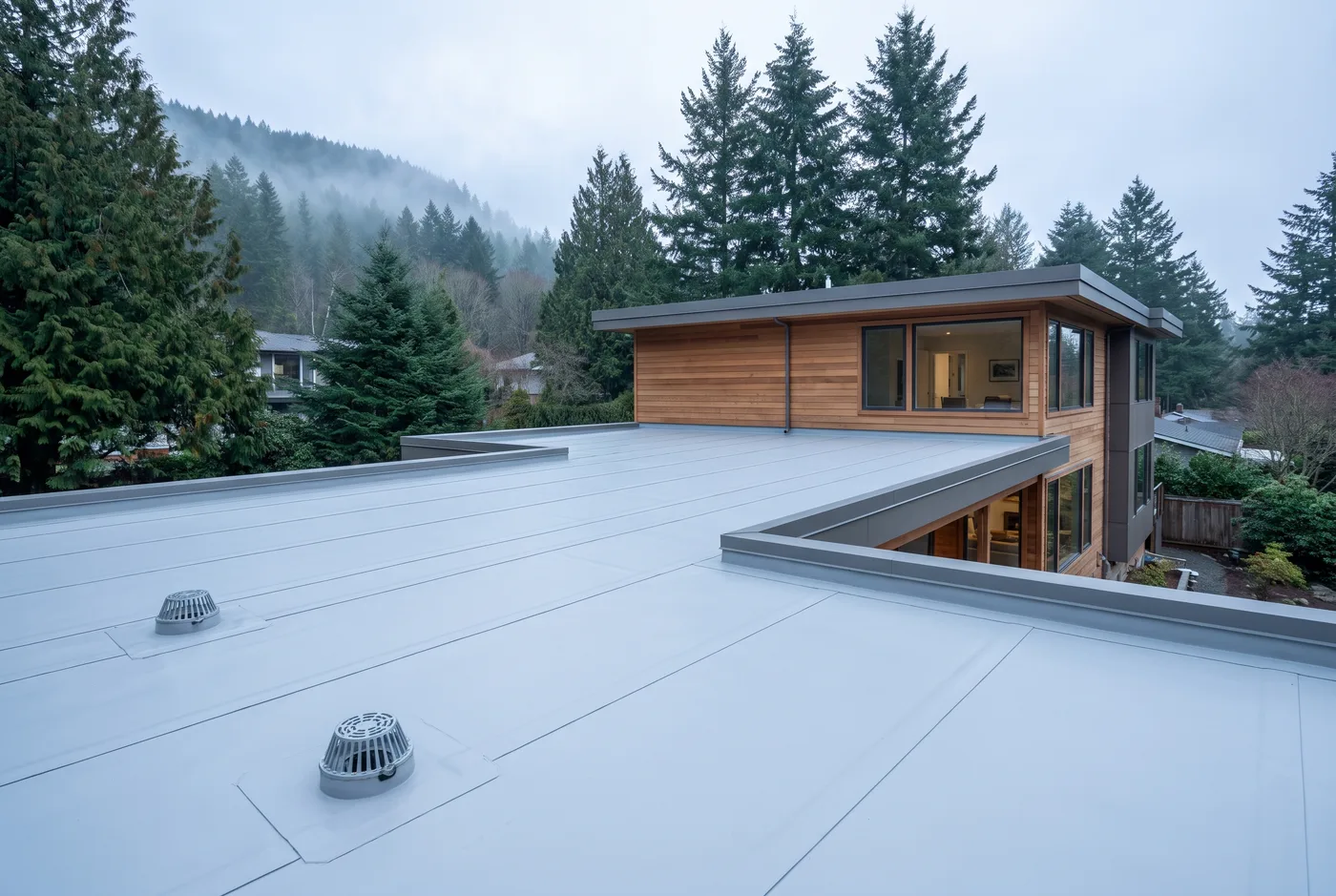
| Flat / low-slope membrane | 15-25 years | Ponding water, UV exposure, flashing failures |
If your roof is near the end of its range, it’s worth comparing a like-for-like replacement against stepping up to a longer-lasting material. Our roof replacement team scopes both, so you can see the real trade-off. And our guide to how long a metal roof lasts explains why standing-seam metal roofing so often wins the long-run math around here.
What shortens roof life in Whatcom County?
Two identical roofs can age a decade apart, depending on where they sit. These are the local stressors that pull lifespans toward the low end of every range:
- Moss and steady damp. Shaded north slopes under the firs stay wet for months, and moss lifts and rots shingles and shakes from underneath. Never pressure-wash — it strips granules and drives water under the roof. A gentle moss treatment and roof cleaning plus a zinc or copper ridge strip is the safe fix.
- Salt air near the water. Homes at Bellingham Bay, Birch Bay, Blaine, Semiahmoo, and Cherry Point sit in sea mist that rusts cheap fasteners and cut metal edges.
- Wind and rain. Hard northeast outflow winds down the Nooksack and Fraser valleys lift shingle tabs. And our wet winters — heaviest from November through January — find every weak flashing and worn valley.
- Deferred maintenance. In a wet climate, a small leak or a lifted shingle grows fast, and putting off a cheap repair can turn it into a full replacement. Catching problems early is the cheapest roof insurance around here.
7 signs you need a new roof
You don’t have to guess. These are the signs a roof is at or past the end of its life — the more you can check off, the closer you are to a replacement, not a repair:
- Curling, cracked, or missing shingles across the roof, not just one or two blown off after a storm.
- Granules in the gutters — piles of sand-like grit mean the shingle surface is wearing away and its sun protection is gone.
- Daylight or active leaks in the attic — light showing through the deck, water stains, or damp insulation after rain.
- A sagging roofline or soft deck, which points to trapped moisture and rotting sheathing underneath.
- Moss and rot all over, especially thick mats on north slopes that have already worked under the shingles or shakes.
- The roof is past its warranty age — a 20-year shingle roof at year 22 owes you nothing, and repairs stop being worth it.
- Repeated repairs in the same or many spots — once you’re patching every winter, you’re renting time on a roof that needs replacing.
One sign often means a repair. Several together usually mean it’s time. A free inspection through our roof inspections & maintenance program tells you which camp you’re in. And our guide on what a roof inspection costs explains what to expect (roof inspections are free; real-estate reports run up to about $450).
Repair vs. replace: how to decide
Age and how widespread the damage is settle most decisions. Here’s a quick way to think about it:
- Repair when the roof is well within its lifespan, the damage is in one spot — a few shingles, one flashing, a single leak — and the deck under it is sound. A targeted roof repair runs about $450-$3,500 and buys you years.
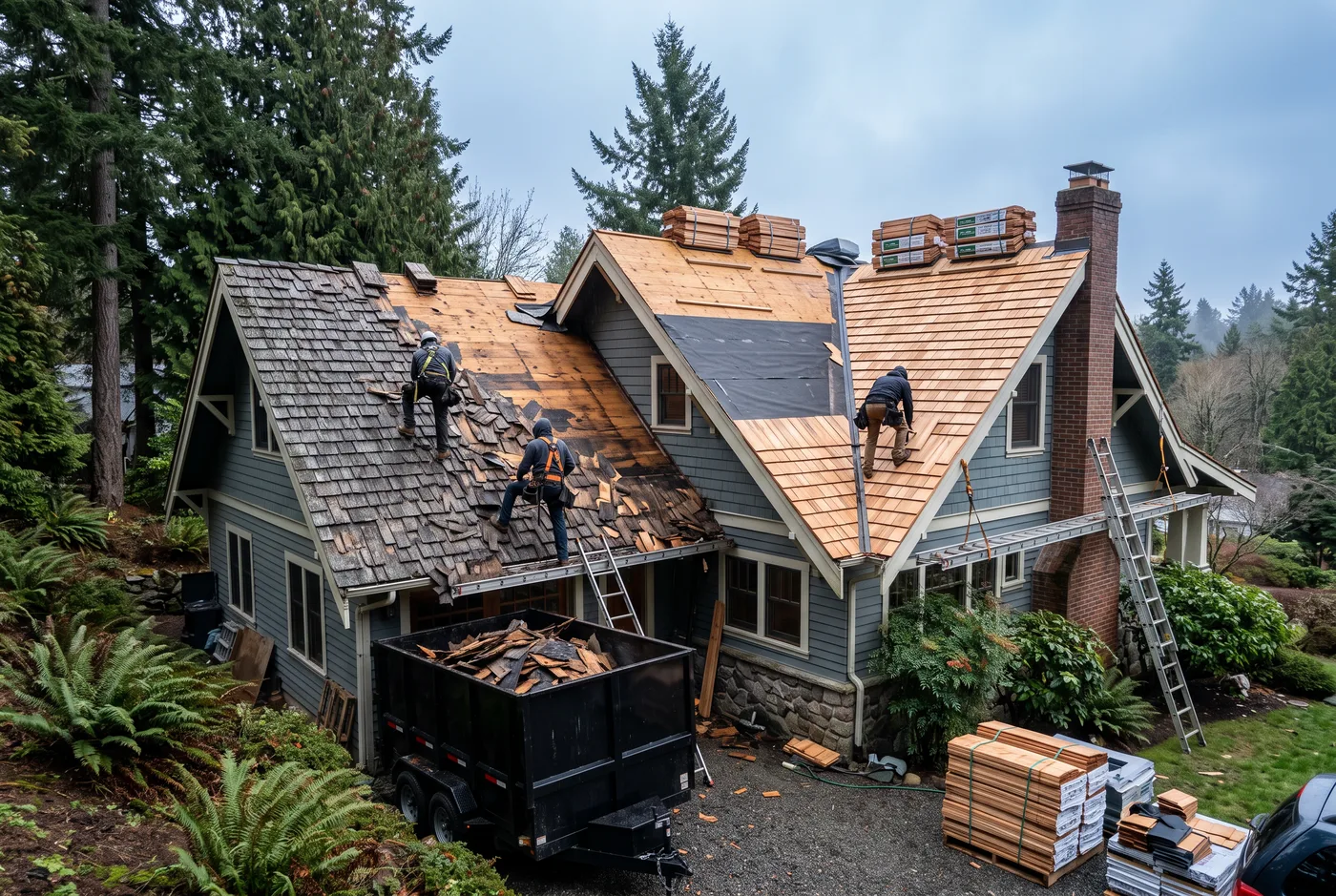
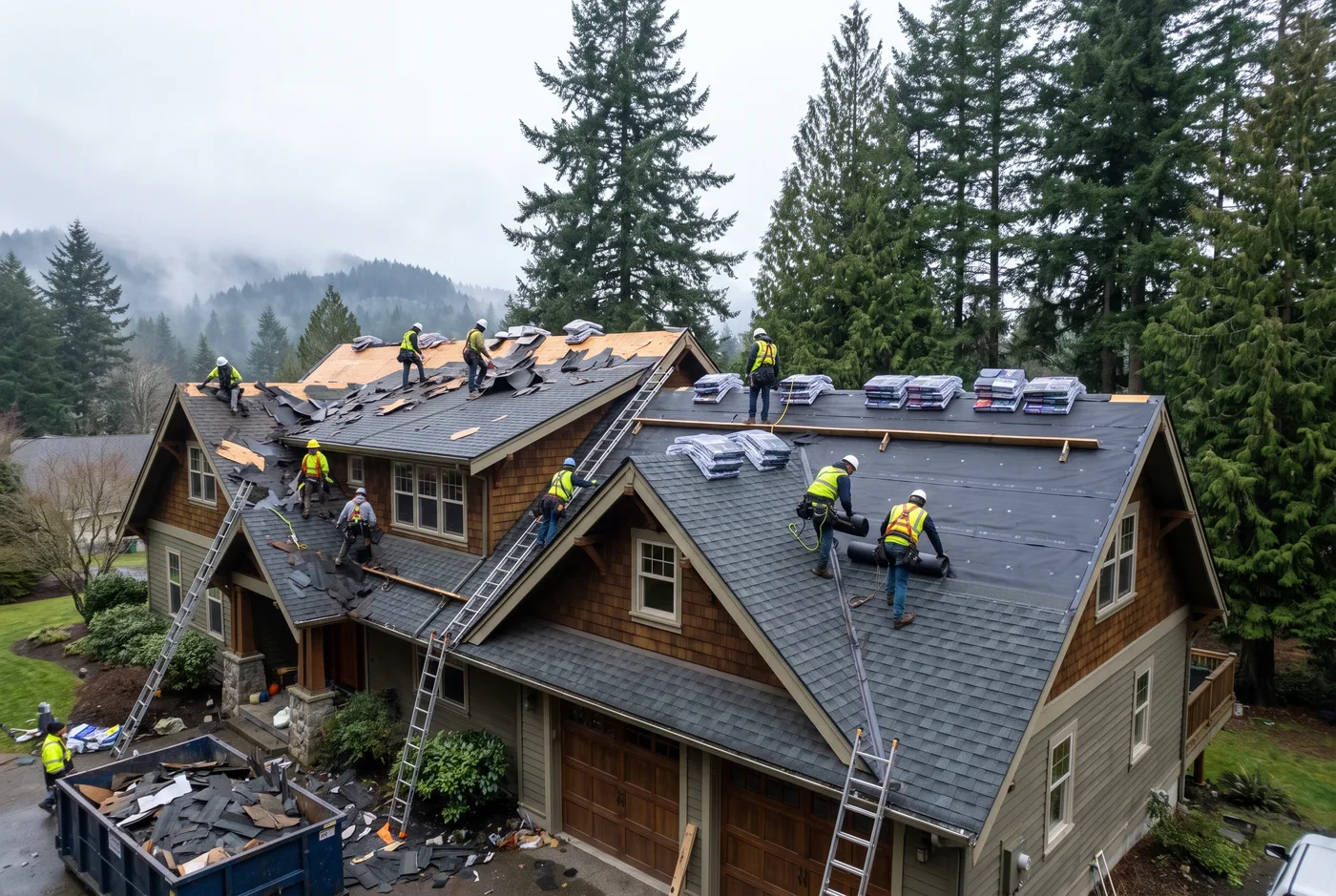
- Replace when the roof is at or past its age, problems are all over, the deck is soft or rotted, or you’re paying for repairs every season. A full replacement is a local $11,000-$40,000+ estimate — not a quote — but it resets the clock and, on metal, can be the last roof you buy.
The honest answer is often somewhere in between, and it depends on what an inspection finds under the surface. We’ll always tell you when a repair is the smarter money — pushing a sound roof toward an early replacement isn’t how we work.
How long do roofs last in the Pacific Northwest?
Usually shorter than the national averages. The wet, mild Pacific Northwest climate — and the high-moss, sometimes salt-touched roofs of Whatcom County most of all — feeds moss, algae, and slow moisture damage that dry climates never deal with. That’s why a shingle rated for 30 years in Arizona often gives 18-22 usable years on a shaded Whatcom County slope, and why metal, which shrugs off rain and moss, is the best long-term choice here. Build quality and upkeep matter as much as the material: yearly inspections, clear gutters, and moss control regularly add years to any roof.
Get a straight answer for your roof
Not sure if you need a new roof or just a repair? We give free roof inspections and written estimates across Bellingham, Ferndale, Lynden, Blaine, Everson, and the Mount Baker foothills, with honest repair-vs-replace advice and a workmanship warranty. Call Glacier Roofing at (360) 483-1333 or request your free inspection, and we’ll give you real numbers for your material, your slope, and your exposure.
Frequently asked questions
How often should a roof be replaced?
How do I know if I need a new roof?
How long do roofs last in the Pacific Northwest?
Should I repair or replace my roof?
Does moss shorten a roof's life in Whatcom County?
Ready to move forward?
Talk to a local Whatcom roofer — free inspection, honest advice.