Published July 14, 2026 · by Glacier Roofing
Key takeaways
- Fall is the window: get every task done before the November rains, outflow winds, and foothill snow arrive.
- Clear debris and gutters, treat moss, check flashing, and trim branches away from the roof.
- Book a professional inspection by late October so small problems get fixed while it is still dry.
- Outflow winds funnel down the Nooksack and Fraser valleys every winter, so secure edges and ridges early.
- When a storm does hit, tarp the breach, document everything, then call a local Whatcom County crew.
Winter in Whatcom County does not ease in gently. The rain arrives. Cold northeast outflow winds pour down the Nooksack and Fraser valleys, and up around Mount Baker the snow starts to pile on. The roofs that make it through are the ones that were ready in October. This guide gives you a straightforward fall roof maintenance checklist built for Whatcom County homes. Work through it and your roof is squared away before the weather turns.
Fall is your window. Before the November rains, outflow winds, and foothill snow arrive, clear all debris and gutters, treat moss on shaded north slopes, check and reseal flashing, trim overhanging branches, and book a professional roof inspection. Handling these tasks by late October keeps small problems from becoming winter leaks.
When should you prep your roof for winter?
Start in early fall and finish by late October. Two Whatcom County realities set that deadline. First, we get roughly 35 inches of rain a year in Bellingham — far more in the foothills — and November is the heaviest month by a wide margin. Any weak flashing or clogged gutter you leave in place gets tested within weeks. Second, the cold northeast outflow winds that funnel down the Nooksack and Fraser valleys build through winter, lifting shingle edges and cedar shakes on exposed slopes. In the foothills, snow load and ice dams pile on top of all of it.
There is also a practical reason not to wait. Once the first big blow hits, every roofer in Bellingham, Ferndale, and Lynden is booked on storm calls. Doing prep while the roof is dry means you get honest, unhurried roof inspections and maintenance instead of an emergency scramble.
Your fall roof maintenance checklist
Work through these in order. Most homeowners can handle the ground-level items; anything that means walking a wet or steep slope is worth handing to a pro.
- Clear the roof of debris. Douglas fir needles, cedar litter, and leaves trap moisture against the roof and pack into valleys. Blow or gently brush them off from a ladder or with a roof rake. Never pressure-wash.
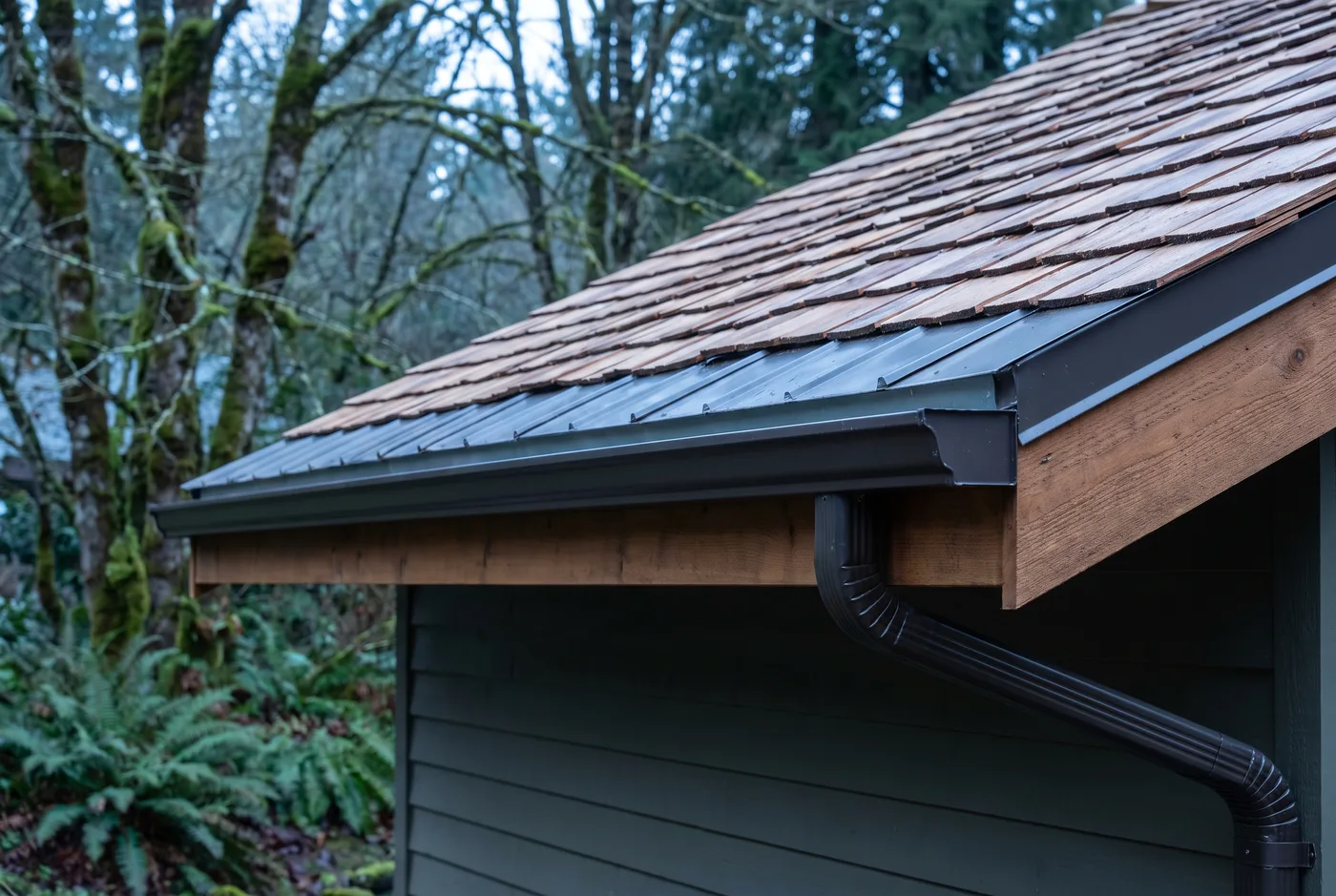
- Clean gutters and downspouts. With a wet winter coming, water has to move. Flush every downspout and confirm it drains away from the foundation. Consider a gutters and flashing tune-up if yours sag or overflow.
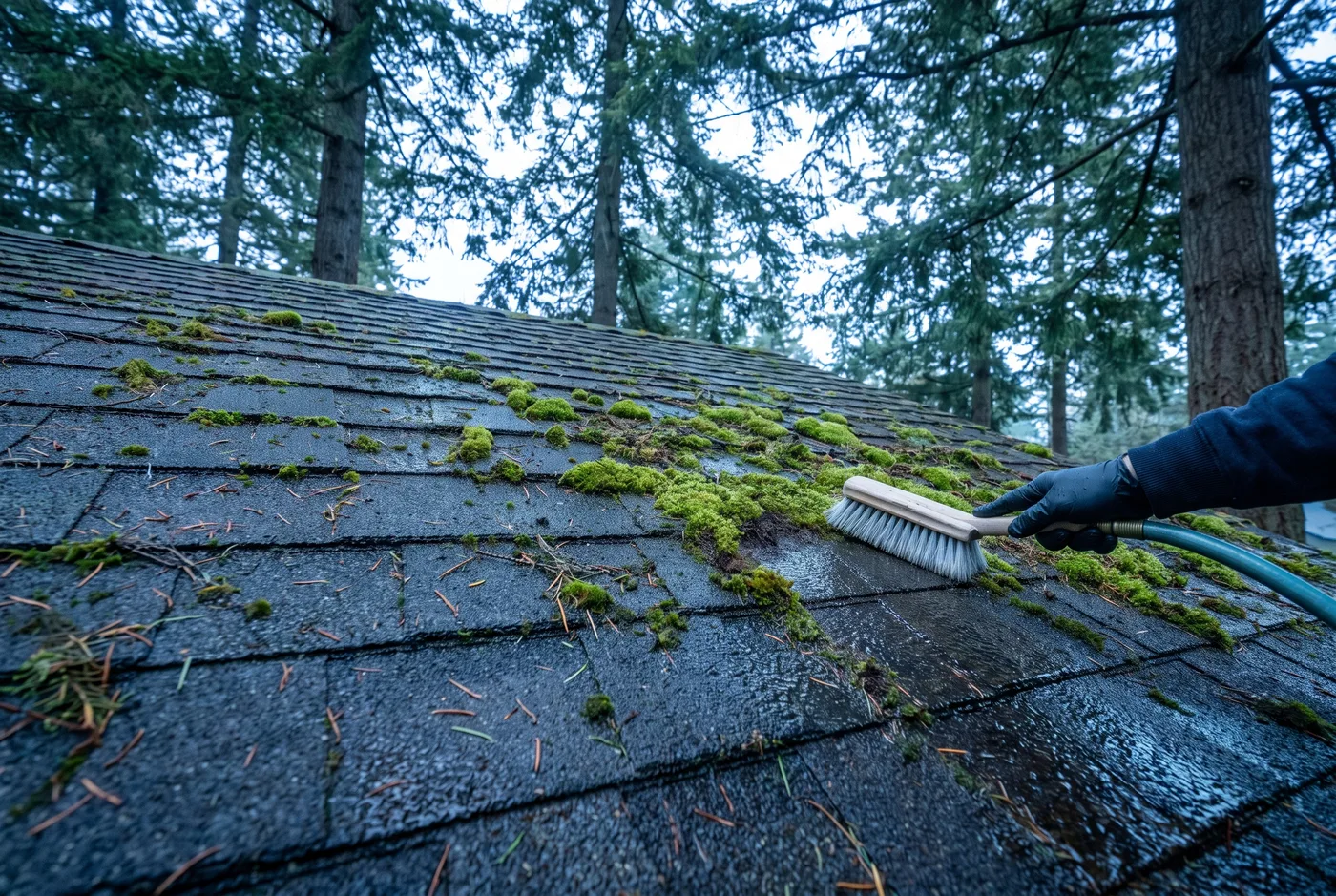
- Treat moss on north-facing slopes. Shaded slopes under fir grow moss that lifts shingles and holds water. Apply a proper moss treatment now; see our guide on how to remove roof moss or book moss treatment and roof cleaning for heavy growth.
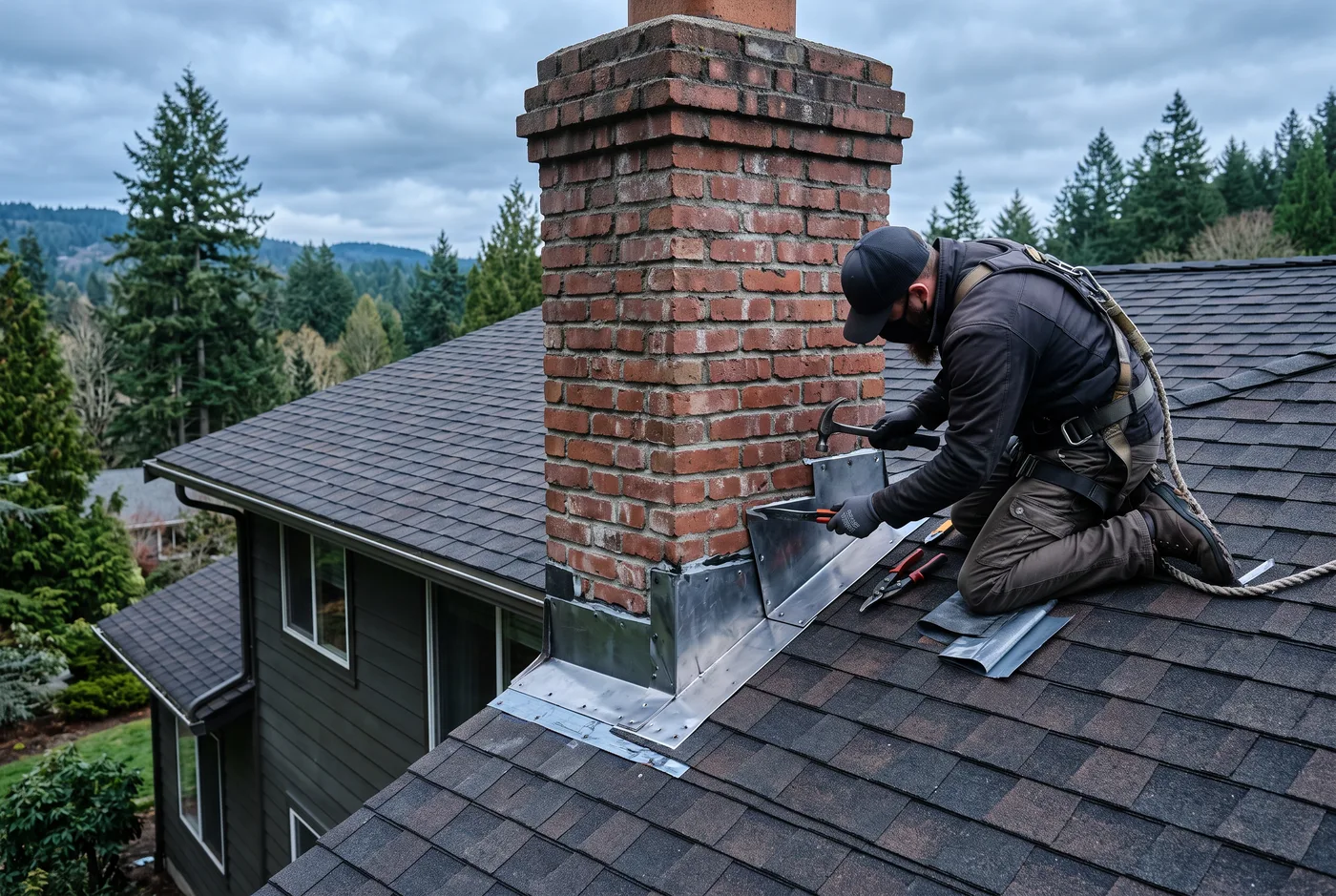
- Check flashing and sealant. Inspect flashing around chimneys, skylights, vents, and valleys. Look for lifted edges, rust, or cracked sealant. Salt air near saltwater corrodes cheap fasteners, so failures often start here.
- Trim overhanging branches. Cut back limbs so wind cannot whip them against the roof and so debris stops falling onto it. Aim for several feet of clearance from the roof surface.
- Secure loose edges and ridges. On open, wind-exposed lots especially, check that shingle edges, ridge caps, and shake courses are tight. Wind finds the loose one first.
- Inspect the attic. From inside, look for daylight, water stains, or damp insulation. Good attic insulation and ventilation are also your best defense against foothill ice dams, so this step earns its place.
- Add zinc or copper ridge strips. These slowly release metal ions that keep moss from returning on chronically shaded slopes, cutting future cleaning cycles.
- Book a professional inspection. Finish with a trained set of eyes. Roof inspections and written estimates are free, and fall is the ideal time to schedule one.
Roof maintenance checklist: why each task matters in Whatcom County
The table below turns the checklist into a quick reference. It shows the local reason behind every item, so you can decide what to do yourself and what to hand off.
| Task | Why it matters in Whatcom County | DIY or pro |
|---|---|---|
| Clear roof debris | Fir and cedar litter hold moisture and feed moss | DIY (from a ladder) |
| Clean gutters & downspouts | Wet winters overwhelm clogged drains, and ice backs up behind them | DIY or pro |
| Treat moss on north slopes | Shade under fir grows moss that lifts shingles | Pro for heavy growth |
| Check flashing & sealant | Salt air corrodes fasteners near the water; leaks start at joints | Pro |
| Trim overhanging branches | Outflow winds whip limbs into the roof | DIY or arborist |
| Secure edges & ridges | Outflow winds and open exposure lift shakes | Pro |
| Inspect the attic | Early water and daylight clues before ceiling stains | DIY |
| Zinc/copper ridge strips | Prevents moss returning on shaded slopes | Pro |
| Professional inspection | Catches problems before November rains | Pro (free) |
Why Whatcom County roofs need serious winter prep
Whatcom County weather stacks the deck against your roof. Heavy November rain, cold outflow winds off the valleys, foothill snow load, marine salt air near the water, and dense fir canopy all test it — every single winter.
- Wind: open lots in Lynden, Ferndale, and the Sumas/Everson gap take the hard outflow gusts that lift and peel edges. Tight ridges and edges are your first line of defense.
- Rain: about 35 inches a year in Bellingham, far more in the foothills and heaviest in November, means water finds any gap immediately. A lifted flashing that would sit harmless in a dry summer becomes a winter leak here.
- Snow & ice: up around Deming, Maple Falls, Glacier, and Kendall, roofs carry real snow load and ice-dam risk. Good ventilation, ice-and-water shield, and snow retention keep melt from backing up under the shingles.
- Salt air: near the water — Bellingham Bay, Birch Bay, Blaine — cheap fasteners and coatings corrode. Repairs on coastal homes should use corrosion-resistant hardware and, on metal, marine-grade Kynar 500 / PVDF coatings.
- Moss: north slopes under Douglas fir stay shaded and damp, so moss is not a cosmetic issue here, it is a roof-shortening one.
We prep and inspect roofs across Bellingham and Fairhaven; Ferndale out to Custer and Cherry Point; Lynden and the farm country; Blaine, Birch Bay, and Semiahmoo; Everson, Nooksack, and Sumas; and up the Mount Baker Highway through Deming, Maple Falls, and Glacier — plus outlying communities like Point Roberts, Sudden Valley, and Lummi Island.
What to do when a winter storm actually hits
Even a well-prepped roof can take damage in a big blow. If it does, act fast and in this order:
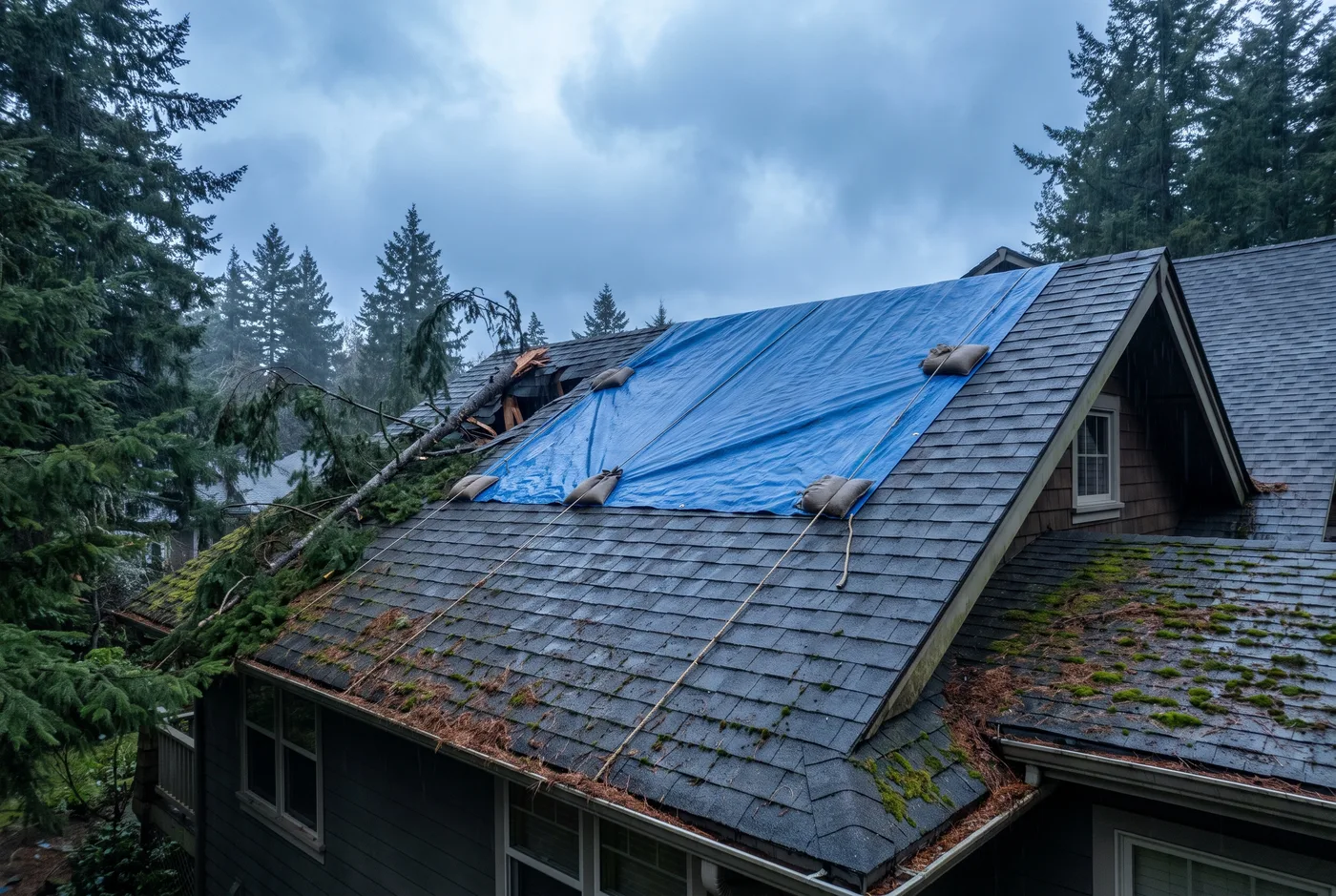
- Tarp the breach. Stop water from getting in. Get a tarp over the damage or call for same-day storm and emergency roof repair. Because our crews are local to Whatcom County, we can often reach you the same day.
- Document everything. Photograph the roof from the ground, the debris in the yard, and every interior stain, with dates. This protects you if you file a claim.
- Call it in. Reach out to a local roofer and, if the damage is significant, your insurer. Our guide on storm damage and insurance claims walks through the whole process.
Do not climb a wet, wind-loaded roof, and do not start permanent repairs before the damage is documented. Stopping the water and recording the loss come first.
Get your roof ready before November
The best storm repair is the one you never need. Get your roof inspected and prepped this fall, while it is dry and before the calendar fills with emergency calls. Call Glacier Roofing at (360) 483-1333 for a free roof inspection and written estimate, or reach us through our contact page. We will walk your roof, give you honest repair-vs-replace advice, and make sure you head into winter ready for whatever the season sends your way.
Frequently asked questions
When should I prep my roof for winter?
What should be on a roof maintenance checklist?
Can I clean the moss off my roof myself?
How often should a roof be inspected in Whatcom County?
What do I do if my roof leaks during a winter storm?
Ready to move forward?
Talk to a local Whatcom roofer — free inspection, honest advice.